20 June 2024
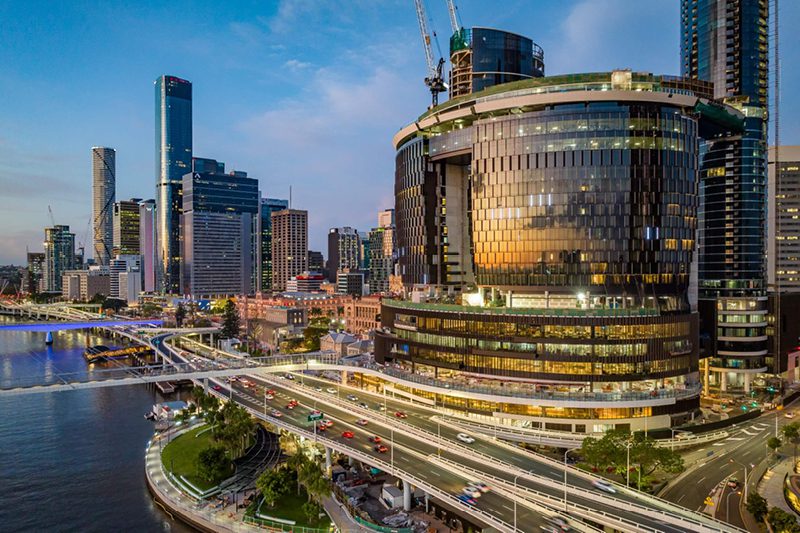
Image source: Queens Wharf
This includes supporting around 130,000 direct jobs, in addition to tens of thousands of indirect jobs, including over 10,000 tourism-induced employment opportunities in the Games year alone (source: 2032 Olympic and Paralympic Games Value Proposition Assessment, Queensland Government).
Upon the announcement of the Games, the International Olympic Committee (IOC) projected that they would generate a direct and indirect economic benefit of $8.5 billion for Queensland, providing “social and community benefits” expected to last nearly two decades.
An economic analysis by KPMG supported this prediction, estimating that the Games would deliver $8.1 billion in benefits to Queensland and provide a $4.6 billion boost to tourism.
Assessing the benefits and magnitude of these major events can be challenging; thus, reviewing historical insights from previous Games can highlight potential legacies:
- London 2012: Hosted over 4,000 business leaders from 63 countries, reduced unemployment by 1.2%, and generated £14.2 billion in economic trade and investment benefits within two years.
- Sydney 2000: Following the bid announcement in 1993, dwelling values surged by 60%, and infrastructure projects created 105,000 jobs and attracted 1.6 million visitors. Additionally, over 127 teams from 39 countries conducted pre-Games training in New South Wales, adding approximately $70 million to the state’s economy, with $17 million benefiting regional businesses.
If the Sydney 2000 Olympics serve as any indication, Brisbane and SEQ could be following a similar trajectory.
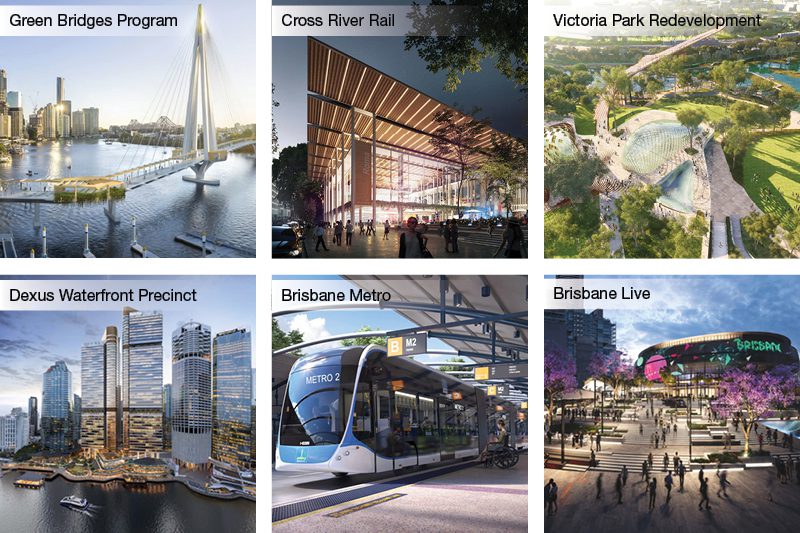
The 2032 Games has spurred an unprecedented wave of investment in major projects across the region, with a pipeline valued at over $107 billion from 2023/24 to 2027/28.
Key Projects Include:
- Cross River Rail: $6.4 billion
- Brisbane Metro: $1.2 billion
- Queen’s Wharf & Neville Bonner Bridge: $3.67 billion
- City Reach Masterplan/Waterfront Dexus: $2.5 billion
- Green Bridges Program: $500 million
- Bruce Highway, Ipswich, and Centenary Motorway Upgrades: $12.6 billion
- Northshore Hamilton Masterplan: $2.9 billion
- Brisbane Live: $2.5 billion
- Victoria Park: $1 billion
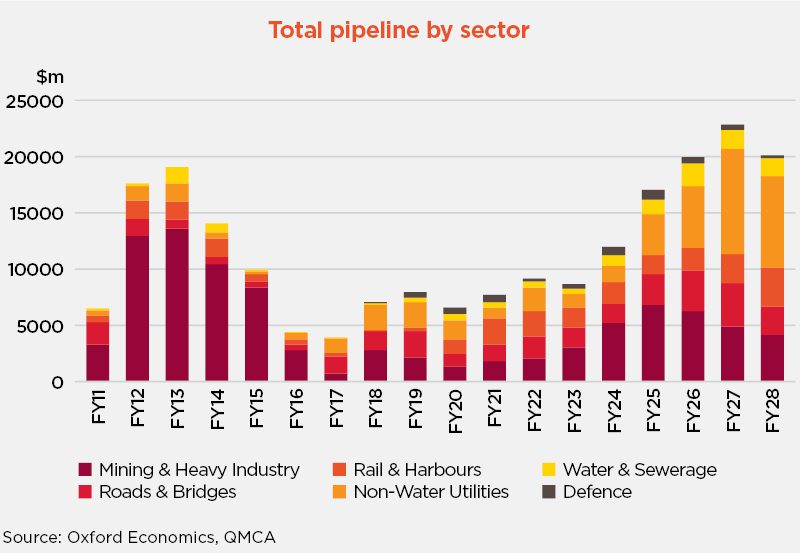
If all projects proceed as planned, total major project activity will surge to $22.9 billion, surpassing the peak level of completed work seen during the resources boom in 2012/13 ($19.1 billion).
Moreover, by 2026/27, the region is projected to experience its strongest year of work since the end of the resources boom in 2014/15.
The chart below highlights the total pipeline by key sectors.
Brisbane is steadily shedding its ‘big country town’ image, attracting new residents due to a growing economy and appealing lifestyle.
The region’s robust infrastructure pipeline and strategic projects will drive economic growth and job creation, solidifying its position as a dynamic and prosperous area.