
29 October 2026
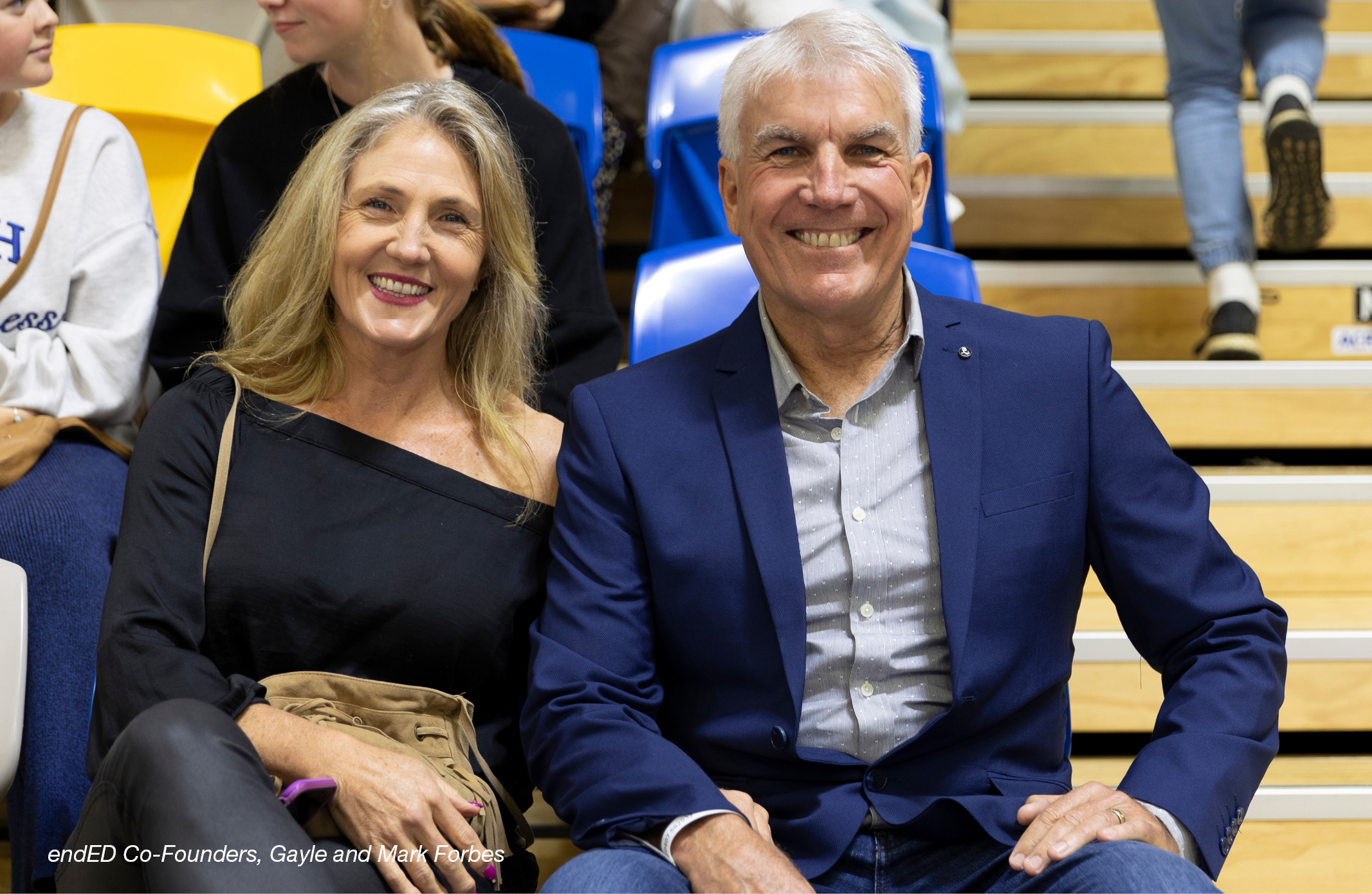
When Mark and Gayle Forbes experienced firsthand the devastating impact of an eating disorder on their family, they discovered something deeply confronting. For those navigating one of Australia’s most complex mental health challenges, the support needed to achieve lasting recovery was often fragmented, difficult to access or simply unavailable.
They made a decision that would ultimately change the lives of countless others: if the support their family needed didn’t exist, they would help create it.
More than a decade later, that determination has evolved into endED, a pioneering organisation reshaping the way Australia approaches eating disorder treatment, recovery and long-term wellbeing.
What makes endED’s work so significant is its recognition that recovery does not begin and end with clinical treatment. It requires connection, continuity and the opportunity to rebuild a life beyond illness.
That philosophy has driven the creation of an extraordinary continuum of care on Queensland’s Sunshine Coast.
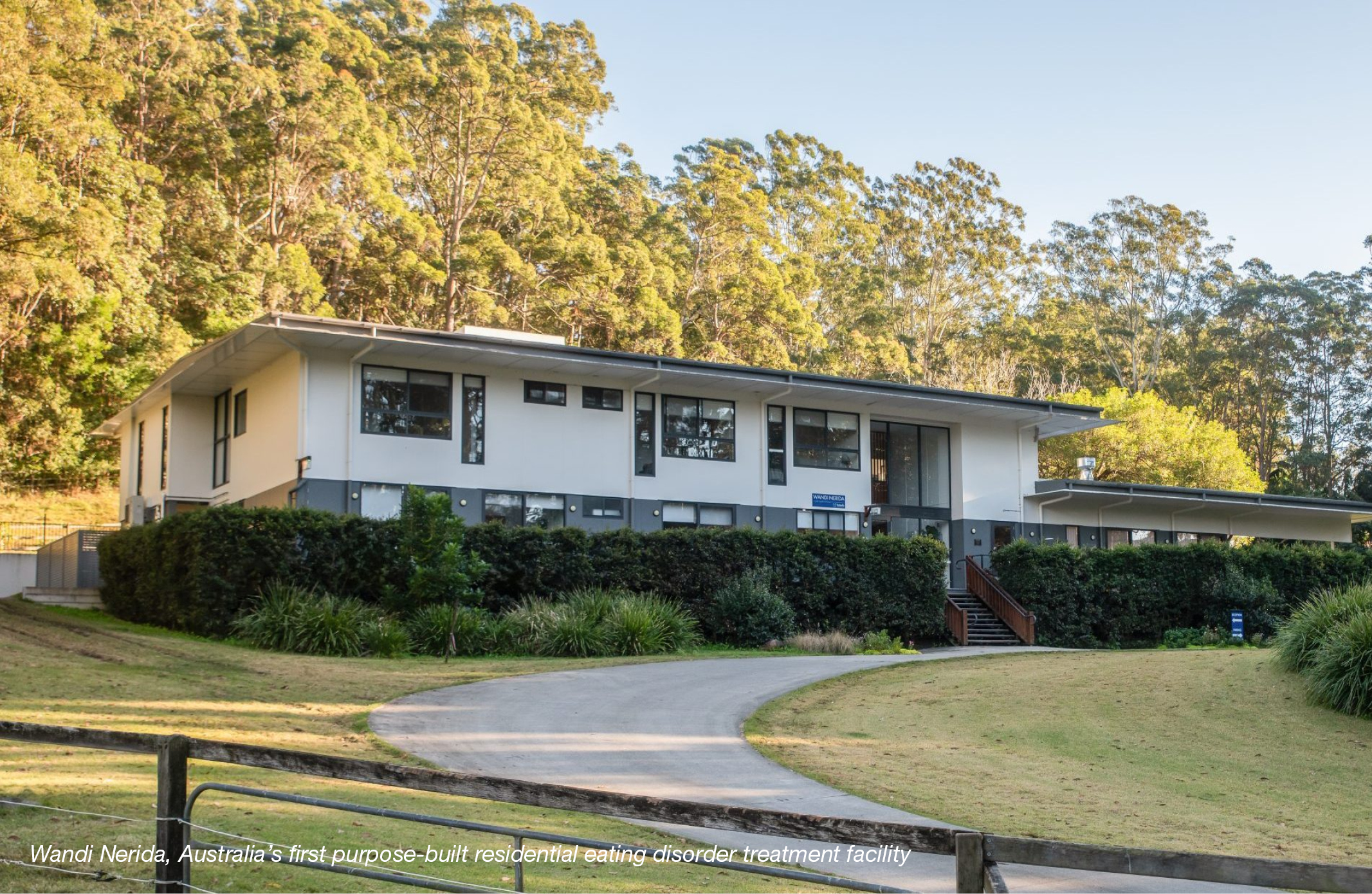
It began with Wandi Nerida, Australia’s first purpose-built residential eating disorder treatment facility, offering an alternative to traditional hospital environments through a more personal, home-like approach to intensive treatment.
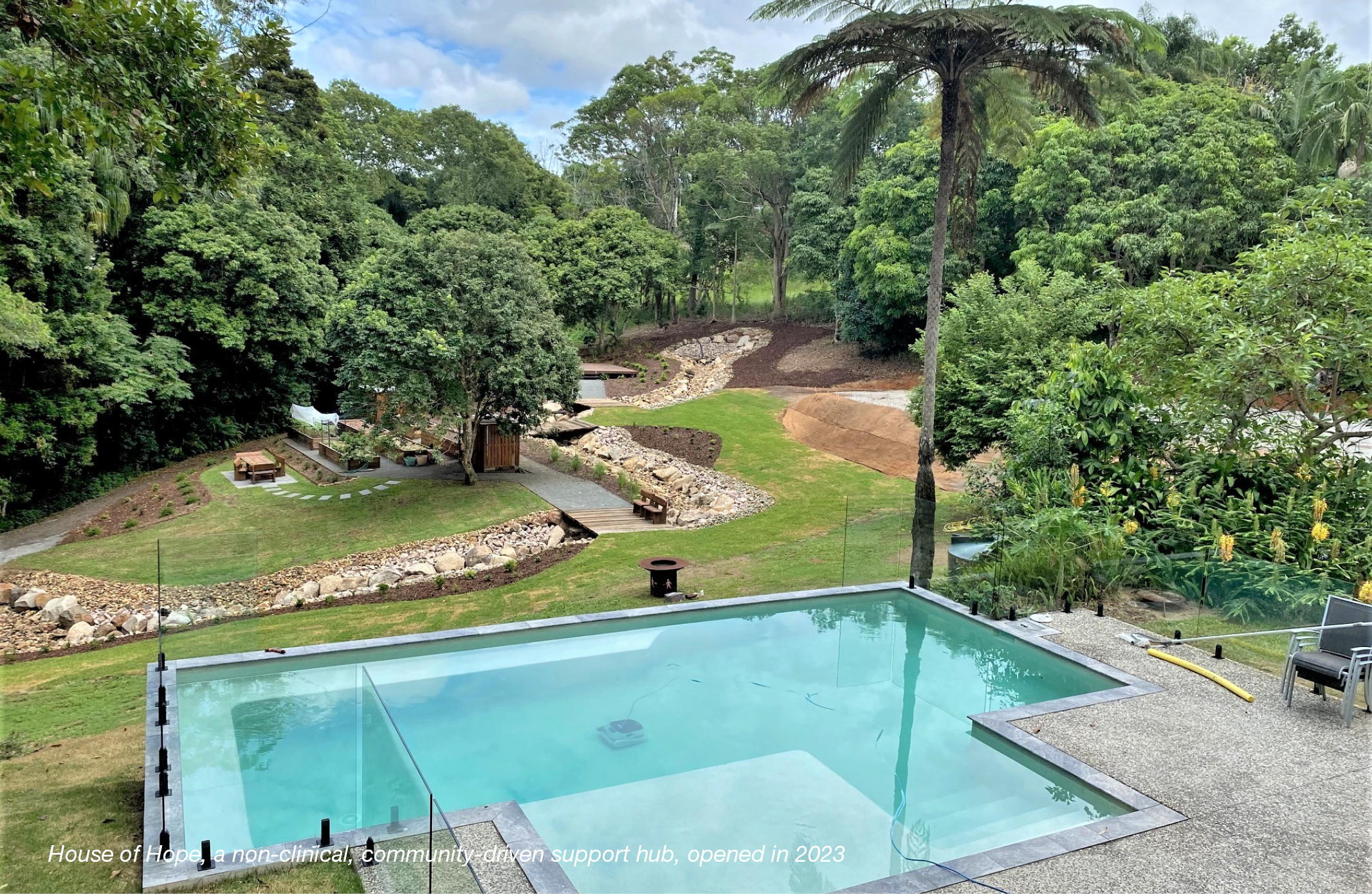
In 2023, House of Hope opened as a vital bridge between clinical treatment and everyday life. This welcoming, community-based recovery hub provides peer mentoring, lived-experience support, supported meals and access to allied health professionals, helping individuals and families navigate the often challenging transition beyond formal treatment.
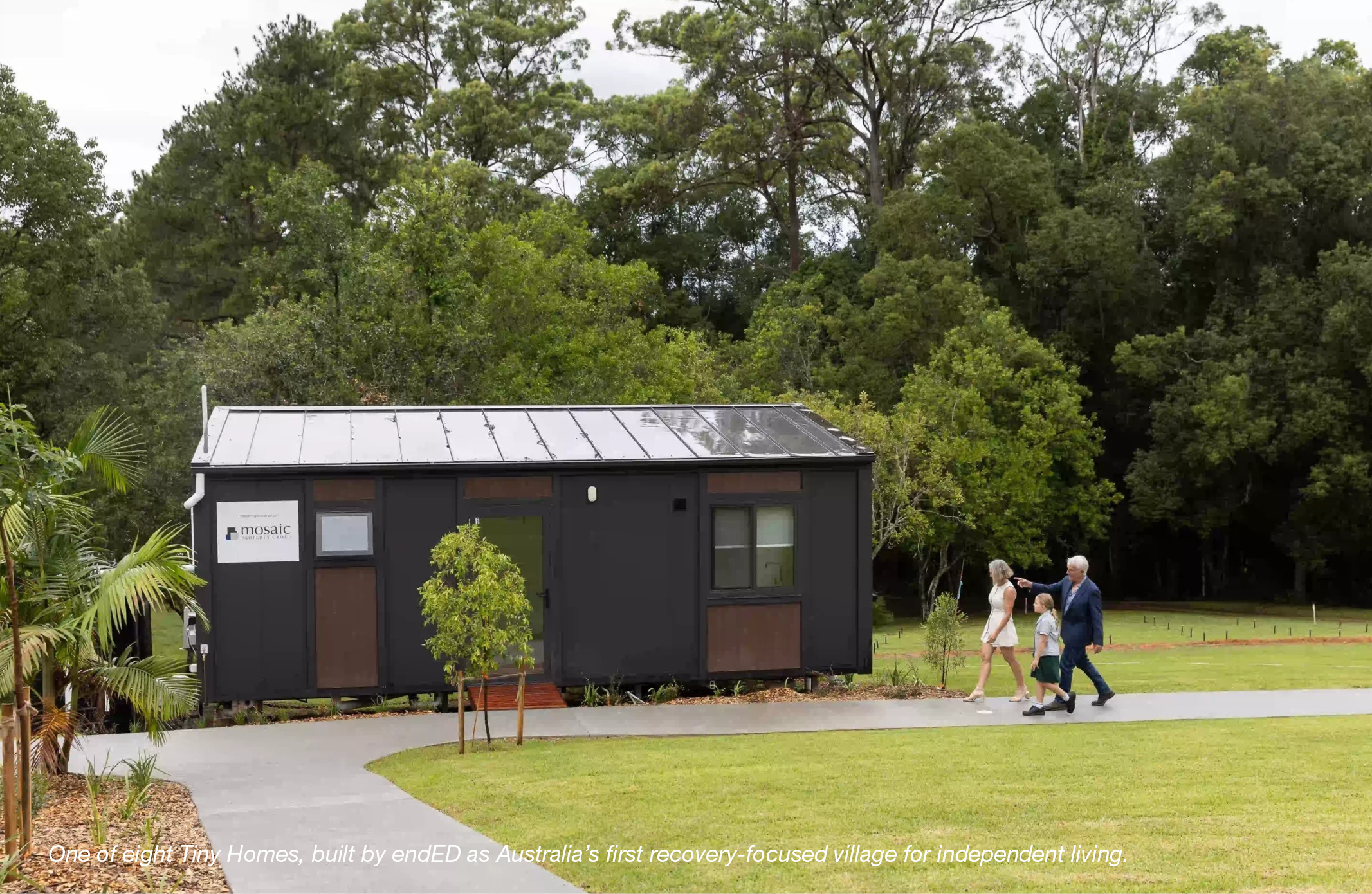
The most recent milestone, Nurture Recovery Village, opened in April 2026. Comprising eight self-contained Tiny Homes, this pioneering independent-living community enables people progressing through recovery to rebuild confidence, independence and everyday routines while remaining connected to the support networks around them.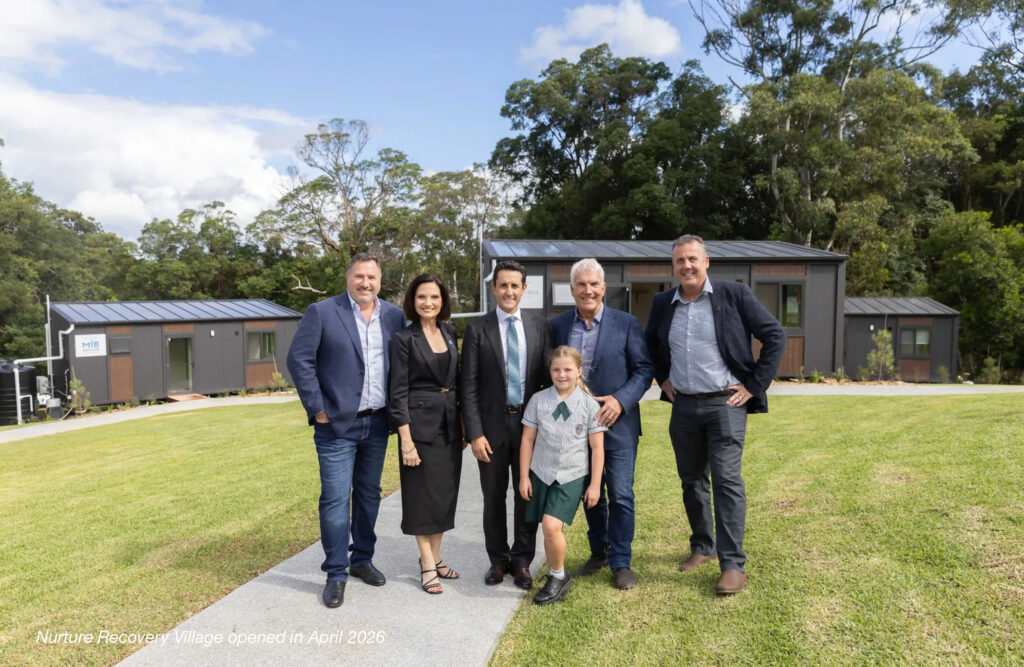
Together, these initiatives represent something remarkable: a connected pathway from intensive treatment through to community reintegration and independent living, addressing gaps that have historically left individuals and families without the continuity of care they need.
The Mosaic Foundation has proudly partnered with endED since 2018, supporting Mark and Gayle’s vision through financial contributions, practical expertise and hands-on involvement in bringing landmark initiatives, including the Nurture Recovery Village, to life.
Underpinning this longstanding relationship is a shared belief that meaningful change requires more than good intentions. It takes conviction, collaboration and a willingness to turn ambitious ideas into tangible outcomes.
We sat down with endED co-founder Mark Forbes to reflect on the deeply personal experience that inspired the organisation, the extraordinary progress achieved over the past decade, and the enduring partnerships helping redefine what recovery can look like in Australia.
Q: Mark, can you take us back to the moment you realised Australia’s existing support system wasn’t enough?
It was through our own family’s experience. When someone you love has an eating disorder, you assume there will be a system in place to provide help. We quickly discovered how difficult it could be to find the right support at the right time. As parents, we felt helpless. We were trying to understand this incredibly complex illness while also trying to keep someone we loved safe.
I remember thinking, surely families shouldn’t have to go through this alone.
Gayle suggested we open our home to parents and carers navigating a similar journey. We did, and every family shared the same experience: there was virtually no support available for them.
That was where endED began. We couldn’t change what had happened to our family, but perhaps we could make the journey a little easier for the next family.
Q: How did your family’s experience shape the vision for endED?
Our family’s experience shaped absolutely everything. endED wasn’t created because we saw an opportunity to start a charity. It came from lived experience and seeing first-hand where the gaps existed.
One of the biggest lessons I’ve learnt is that eating disorders don’t just affect one person. They impact entire families. That’s why I’ve always believed families and carers need to be included and supported wherever possible.
I wanted endED to be a place where people felt seen, heard and understood. A place where their experiences were validated and where they knew they weren’t facing the journey alone.
Q: The Mosaic Foundation has been a long-term supporter of endED. What has that partnership meant to the organisation?
Mosaic Foundation’s support has been incredibly important to our journey. While the financial contribution has undoubtedly helped us grow our programs and services, the relationship has always meant much more than funding.
Mosaic Founder and Managing Director, Brook Monahan, has been a long-term friend and trusted sounding board. Over the years, there have been plenty of moments when I’ve called Brook to discuss a challenge, test an idea or seek advice.
Mosaic has consistently believed in what we’re trying to achieve. They haven’t just sponsored endED. They’ve walked beside us throughout the journey, and that kind of genuine partnership makes an enormous difference for charities like ours.
Beyond financial support, the Mosaic Foundation has played a hands-on role in helping endED bring our landmark projects to life on the Sunshine Coast, including the Tiny Homes in the Nurture Recovery Village.
Q: Eleven years on, what milestones stand out as defining moments for endED?
There have been many proud moments, but a few stand out as particularly significant.
Building Wandi Nerida, Australia’s first residential eating disorder recovery centre, represented a pioneering shift in Australia’s eating disorder landscape. For the first time, individuals had access to a purpose-built residential environment designed specifically to support recovery beyond acute hospital care. It also demonstrated what was possible when communities, clinicians and supporters came together around a shared vision.
The opening of the endED House of Hope, the creation of our Peaceful Park, the Nurture Village, community gardens and annual community festival have all been important milestones.
The most defining moment for me came this year, when participants completing the 90-day residential program at Wandi Nerida transitioned into Nurture accommodation while continuing to receive support through the House of Hope.
For the first time, we could offer a genuine continuum of care, creating a pathway from residential support through to community reintegration. That completed the model of care we had been working towards for many years.
Q: What role do lived-experience staff play in the success of House of Hope?
Our lived-experience team forms the foundation of House of Hope. It’s incredibly powerful for someone to sit opposite a person who has faced similar challenges and successfully navigated recovery. It creates trust, understanding and hope.
I’ve seen young people arrive in our driveway unable to leave the car because their eating disorder is telling them not to seek help. Time and again, our team members have gently met them where they are and helped them take that first step.
That’s the power of lived experience. It shows people that recovery is possible because they’re speaking with someone who has walked that path before.
Q: Are there any misconceptions about eating disorders you’d like to challenge?
Absolutely. Eating disorders are not lifestyle choices, and they don’t always present in ways people might expect.
Another misconception is that people don’t recover. Recovery can be challenging. It isn’t linear and setbacks can occur, but recovery is absolutely possible. In fact, many members of our team are living proof of that.
Q: What does success look like for endED over the next five years?
Success will take many forms. We want to continue supporting other organisations across Australia that are working to establish residential eating disorder services in their own states, sharing both our successes and the lessons we’ve learnt along the way.
We are also committed to advocating for greater inclusion of parents and carers in treatment pathways. Families are often the people providing day-to-day support, yet too frequently they are excluded from the process.
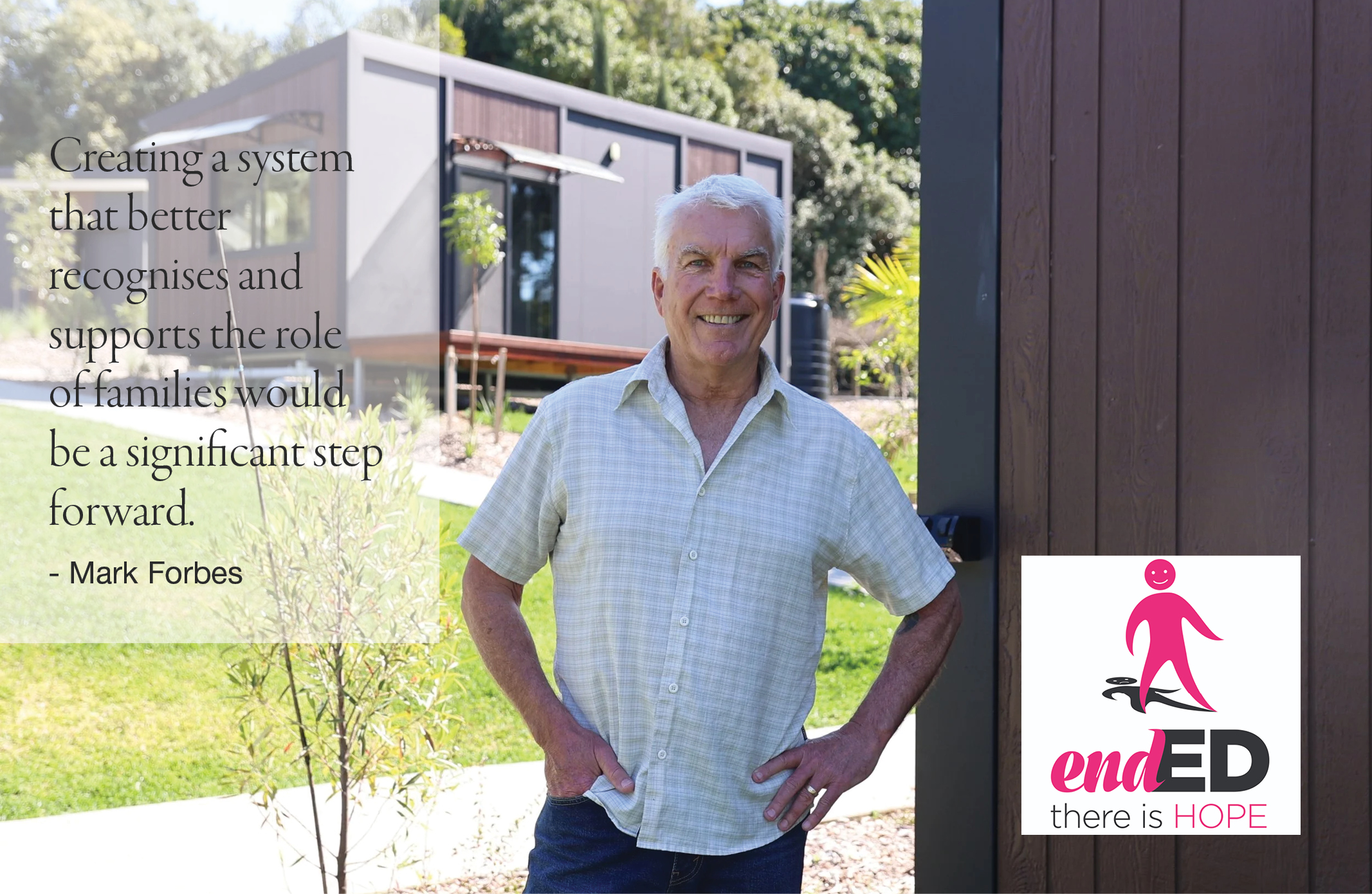
Creating a system that better recognises and supports the role of families would be a significant step forward.
Q: How can people get involved with endED?
Everyone has a role to play in supporting those impacted by eating disorders. Whether it’s listening without judgement, learning more about the illness, making a financial contribution, or partnering with endED through business and community connections, every contribution helps create better outcomes for individuals and families navigating recovery.
For businesses and individuals who are in a position to contribute financially, we welcome their involvement. Having established a complete continuum of care, together, we can build a future where no individual or family has to face an eating disorder alone.
The Next Chapter: A Future Where No Family Faces Recovery Alone
What Mark and Gayle Forbes have achieved is remarkable. From their own family’s experience, they have helped create an entirely new pathway to recovery, challenging conventional approaches and demonstrating what is possible when determination, lived experience and community support come together.
But the work is far from finished.
The next chapter is about extending that impact beyond the Sunshine Coast, sharing endED’s pioneering model of care, advocating for greater recognition of families and carers, and helping more Australians access the support they need throughout recovery.
The Mosaic Foundation will continue to proudly stand alongside Mark, Gayle and the endED team as they pursue this vision.
But lasting systemic change requires more than the commitment of any one organisation. It demands greater awareness, a deeper understanding of the complexities of eating disorders, stronger community engagement and a collective willingness to challenge the gaps that continue to exist in our healthcare system.
Every conversation that challenges a misconception, every individual who offers support and every organisation willing to contribute brings us closer to a future where recovery is supported at every stage.
What began with one family’s determination to ensure others wouldn’t face the same challenges has become a powerful example of what collective action can achieve.
The opportunity now is to build on that progress, so that no individual or family has to navigate the journey to recovery alone.
To learn more about endED, support its work or become involved, visit EndED